~歡迎企業洽談包班需求 ~
「軟體開發/程式設計/智慧綠能課程主題館」 同步招生中 !!
課程緣起:
在資訊化時代,資訊機房(Data Center)已是每個企業不可缺少的重要單位,一旦機房或相關的IT服務出問題,對客戶造成的傷害將是即時且顯而易見,甚至造成難以估計的業務損失,由此可見得資訊機房對現今企業的重要性!因此「如何設計、維護和營運一個高可用性、高效率的資訊機房」也就成為企業能否於激烈競爭中脫穎而出、避免造成意外損失的重要關鍵。
雖然企業已知資訊機房的重要性,但事實上,目前全球大多數的資訊機房都未能完全達到可用性、容量、安全與效率上的要求。對於許多企業而言,對資訊機房的要求是「絕對不能出錯」,一旦出錯將可能會「影響整個企業的存續」,但是企業對於機房相關人員,卻又往往未能提供夠專業的、能與國際接軌的完整訓練,導致機房管理常常都只能靠著前人的經驗累積與新人的自行摸索,而機房內放滿綠色乖乖,也成為國內機房的特有文化。究竟要怎麼做,才能培訓出能與國際接軌的專業級機房管理人才,進而設計出高可用性、高效率的資訊機房?協助相關人員取得國際公認的資訊中心管理認證,將是企業投資人才的最佳選擇。
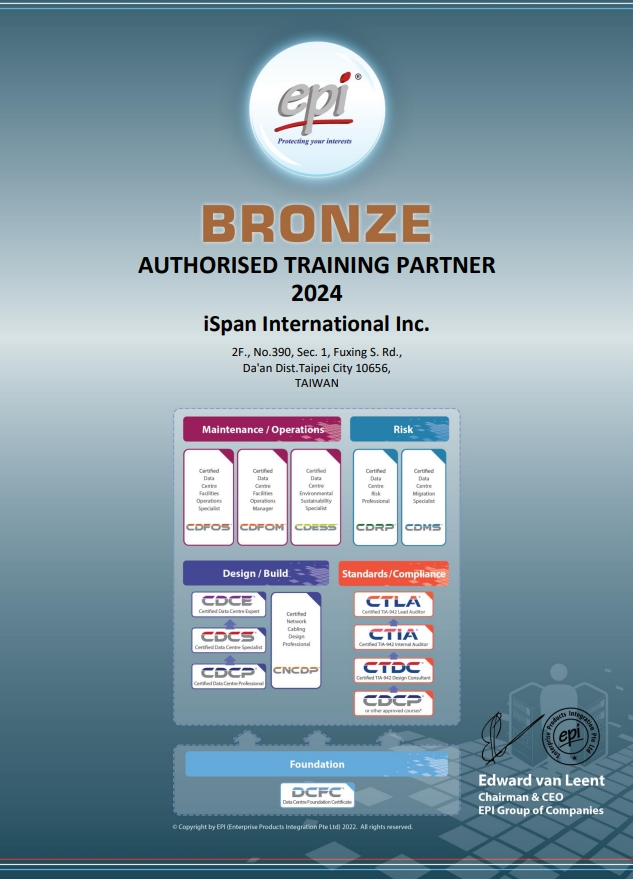
由EPI (Enterprise Products Integration)開發的Data Center系列認證,是國際上極具權威性的資訊機房領域專業認證,提供從基礎到高階、技術到管理,完整的資訊機房人員認證架構,也被許多國際性的大型企業視作資料機房專業人才之訓練發展與能力評估的標竿。其中,CDCP (Certified Data Centre Professional) 是系列認證的基礎,透過兩天扎實的訓練課程,可讓參訓學員瞭解資訊機房的關鍵組成要素,除指導學員如何建立與改善資訊機房的電源、冷卻、安全、佈線等重要面向、確保資訊機房的高可用性外,並指引學員關於機房營運與維護的相關知識,以成為與國際接軌的資訊機房專業人才。
CDCP認證之於Data Center人員,就如同ITIL認證之於IT服務管理人員,未來可能是必備的專業認證,但由於過去國內較少開辦相關課程,要取得相關認證者常常需專程飛到國外,讓許多有志者因成本過高而卻步。有鑑於此,資展國際特與EPI合作,開辦「CDCP資訊機房管理國際認證班」,以培訓國際化的資訊機房管理專業人才。目前全球已有約20,000人取得CDCP認證,但台灣僅有百餘人取得,足見此證照在台灣的稀有性與取得證照的高度價值,而資展國際正式引進CDCP課程後,已培訓近百位新科CDCP資訊機房管理師,成效卓著。
課程目標:
- 依據現在和未來的需求,選擇適合作為重要資訊機房的最佳地點。
- 描述資訊機房在高可用性方面的所有重要組成元件,並說明如何有效率的建立資訊機房。
- 說出並應用各種產業的標準。
- 描述包括UPS、消防、冷卻、監控系統、佈線標準等各種技術,並說明要如何選擇並有效的使用這些技術,才能以最低的成本提升資訊機房的高可用性。
- 檢查機房的配電系統以避免停機(downtime)造成的損失。
- 運用新的技術與方法,來增強資訊機房的冷卻能力與效率。
- 設計高可靠度與高擴充性的網路架構,並學習如何確保每位安裝人員都能使用正確的測試技術。
- 與設備供應廠商簽訂有效的維護合約,以確保能用最低的成本獲得最高的保障。
- 設定有效的資訊機房監控,以確保能讓正確的人員能得到正確的資訊。
- 確保能實施適當的安全措施(包括流程和技術),以保護資訊機房所保有的企業重要資訊。
適合對象:
- 負責設計、維護和營運資訊機房(Data Center)者。
- 與資訊機房相關的資訊(IT)人員與設施(facilities)人員。
- 資訊部門相關人員與主管。
- 想學習如何規劃與建置高可用性、高效率的資訊機房者。
- 想取得CDCP資訊機房國際認證者(無經驗也可)
課程特色:
- 課程授權:資展國際已取得EPI授權,開辦由官方正式授權的認證課程。
- 考試授權:EPI的Data Center考試是委由國際認證機構EXIN辦理,資展亦為EXIN正式授權的AEC (授權考試中心),可開辦EPI的各級考試。
- 官方教材:本課程的教材採用EPI官方教材,最能符合認證考試的需求。
- 國際講師:本課程的講師為EPI的國際級資深顧問,具備豐富的資歷與實務經驗,將專程fly in至台灣進行授課。
- 中文講授:本課程將指定邀請EPI唯一會說中文的顧問前來授課,降低語言的隔閡。
- 證照價值:目前全球已有約20,000人取得CDCP認證,但截至2012年底台灣僅有不到百人取得,足見此證照在台灣的稀有性與取得證照的高度價值。
- 認證成績:原資策會於2013年正式引進CDCP課程後,已培訓近百位新科CDCP資訊機房管理師,成效卓著。
參訓條件:
- 建議能有一年以上的資訊機房或設施環境的相關工作經驗為佳。
課程大綱:
| 課程單元 | 課程內容 |
|---|---|
| Importance and causes for downtime | ¨ The Data Centre, its Importance and causes for downtime |
| Standards and Best Practices | ¨ Data Centre Standards and Best Practices |
| Data Centre Location, Building and Construction | ¨ Selecting appropriate sites and buildings and how to avoid pitfalls
¨ Various components of an effective data centre and supporting facilities setup |
| Raised Floor/Suspended Ceiling | ¨ Applicable standards
¨ Uniform, concentrated and rolling load definitions ¨ Signal Reference Grid, grounding of racks ¨ Disability act and regulations ¨ Suspended ceiling usage and requirements |
| Light | ¨ Standards
¨ Light fixtures types and placement ¨ Emergency light, EPS |
| Power infrastructure | ¨ Power infrastructure layout from generation to rack level
¨ ATS and STS systems ¨ Redundancy levels and techniques ¨ Three phase and single phase usage ¨ Power distribution option within the computer room ¨ Power cabling versus bus bar trunking ¨ Bonding versus grounding, isolation transformers and Common Mode Noise ¨ Form factors and IP-protection grades ¨ Power quality guidelines ¨ Real power versus apparent power ¨ How to size and calculate load in the Data Centre ¨ Generators ¨ Static and dynamic UPS systems and criteria to use the correct one for the correct application ¨ Battery types and making the right selection and testing ¨ Thermo-graphics |
| Electro Magnetic Fields | ¨ Sources of EMF
¨ Electrical fields and magnetic fields definitions ¨ Effects of EMF on human health and equipment ¨ TEMPEST and (H)EMP ¨ Standards ¨ EMF shielding solutions |
| Cooling infrastructure | ¨ Cooling trends and requirements for the current and future set-up
¨ Cooling units and conversion rates ¨ Sensible and latent heat definitions ¨ Difference between comfort and precision cooling and its impact on energy efficiency ¨ Overview of different air conditioner techniques ¨ Techniques to increase effectiveness and efficiency of cooling in the computer room ¨ High density cooling techniques and common mistakes |
| Water Supply | ¨ Importance of water supply and application areas
¨ Backup water supply techniques |
| Designing a Scalable Network Infrastructure | ¨ Cabling hierarchy
¨ Cable characteristics ¨ Determining connectivity requirements ¨ Network redundancy ¨ Building-to-building connectivity ¨ Recommended installation practices ¨ Testing and verifying structured cabling ¨ Network monitoring system requirements |
| Fire Suppression | ¨ Standards for ‑re suppression
¨ Detection systems ¨ Various ‑re suppression techniques and systems, their benefits and disadvantages ¨ Signage and safety ¨ Regulatory requirements and best practices ¨ How to ensure that your ‑re suppression is working |
| Data Centre Monitoring | ¨ Data Centre monitoring requirements
¨ EMS versus BMS ¨ Water leak detection systems ¨ Notification options and considerations |
| Operational Security and Safety Practices | ¨ Data Centre security layers
¨ Physical, infrastructure and organizational security ¨ Safety measures and essential signage |
| Labelling | ¨ Choosing a labelling scheme
¨ Recommended labelling practices ¨ Network labelling |
| Documentation | ¨ How to setup proper documentation
¨ Document management policies and procedures |
| Cleaning | ¨ Cleaning practices for the Data Centre |
| MTBF / MTTR | ¨ Standards and definitions
¨ Calculation models ¨ The ‘real’ value |
| Maintenance | ¨ Maintenance Contracts / SLA / OLA |
| 模擬考試 | ¨ Mock Exam |
| 正式認證考試 | ¨ EXAM: Certified Data Centre Professional |
認證考試:
在課程結束後,學員將取得參加CDCP認證考試的資格。CDCP考試時間為一小時,close book考試,在40題選擇題中答對27題以上者可通過考試,並獲得由EPI正式頒發的CDCP國際認證。該證書有效期為3年,之後需要再參加新版課程及考試,以維持CDCP的認證資格。(考試將於第二天課程結束後直接進行認證考試)